


 English
 한국어
한국어 français
 Deutsch
 русский
 português
 العربية
 tiếng việt
 ไทย
ไทย Polska
 Nederland

Metal Fibers: Reinforcing Concrete and Beyond
Metal fibers are revolutionizing modern construction and material design. From strengthening concrete to enhancing durability in various applications, metal fibers have become a cornerstone in engineering and industrial innovation. In this article, we’ll explore what metal fibers are, their types, benefits, uses in concrete, and answer common questions, helping you understand why metal fiber concrete is gaining popularity worldwide.
What Are Metal Fibers?
Metal fibers are thin, flexible strands of metal designed to improve the mechanical properties of materials. Unlike bulk metals, these fibers can be distributed evenly within materials like concrete or composites, providing superior strength, ductility, and durability.
Key points:
Manufactured from steel, aluminum, copper, or stainless steel
Diameter typically ranges from 0.1 to 0.5 mm
Can be straight, crimped, or twisted depending on the application
Types of Metal Fibers
Metal fibers come in several varieties, tailored for specific applications:
Steel Fibers – Commonly used in concrete for high tensile strength and crack resistance.
Aluminum Fibers – Lightweight, corrosion-resistant, used in composites and decorative applications.
Copper Fibers – Excellent conductivity, often used in electrical or thermal applications.
Stainless Steel Fibers – Corrosion-resistant, ideal for marine and high-humidity environments.
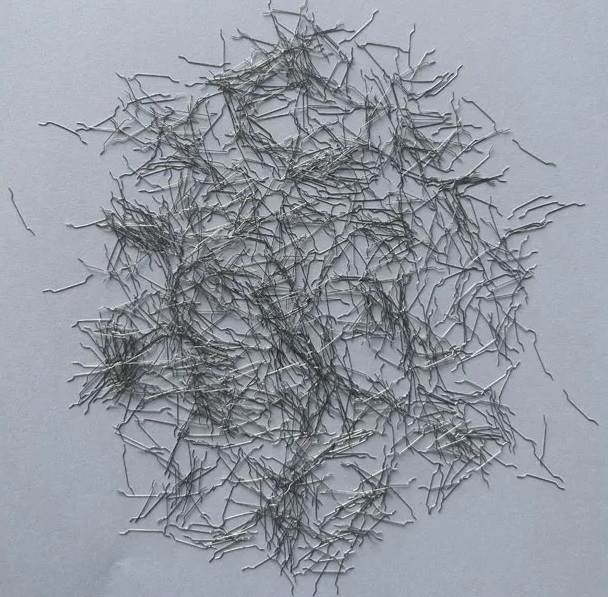
Tip: In concrete reinforcement, steel fibers dominate due to their strength and compatibility with cementitious materials.
Benefits of Metal Fibers
Incorporating metal fibers into concrete or other materials delivers numerous advantages:
Enhanced Durability: Metal fibers reduce shrinkage cracks and improve structural integrity.
Increased Strength: Concrete with metal fiber can withstand higher loads and impacts.
Improved Fire Resistance: Certain metallic fibers enhance concrete’s resistance to heat.
Versatility: Can be used in flooring, precast panels, shotcrete, and industrial applications.
Metal Fibers in Concrete
Metal fiber concrete, or fiber-reinforced concrete (FRC), is concrete mixed with small, discrete metallic fibers. This innovation addresses traditional concrete’s weaknesses, such as brittleness and susceptibility to cracking.
Applications:
Industrial flooring
Airport runways
Tunnel linings
Precast panels
Advantages in Concrete:
Reduces plastic shrinkage cracks
Enhances toughness and impact resistance
Allows for thinner slabs without compromising strength
Other Applications of Metal Fibers
While concrete reinforcement is a primary use, metal fibers also appear in:
Dishes and cookware: Stainless steel fibers can strengthen non-stick surfaces.
Textiles and fabrics: Metallic fibers add shimmer or conductivity.
Electronics: Copper fibers are used in EMI shielding.
Tips for Selecting Metal Fibers for Concrete
Consider Fiber Type: Steel for strength, stainless steel for corrosion resistance
Evaluate Fiber Length and Shape: Crimped fibers anchor better in concrete
Determine Dosage: Too little reduces benefits; too much affects workability
Check Compatibility: Ensure fibers suit your concrete mix and environmental conditions
FAQs
Q1: What are examples of metal fibers?
A1: Examples include steel, aluminum, copper, and stainless steel fibers, each serving specific applications.
Q2: Is fiber a type of metal?
A2: No, a fiber is a form or structure of a material. Metal fibers are metallic in composition but exist in thin, flexible strands rather than bulk metal.
Q3: What is the difference between fiber and metal?
A3: Fiber refers to the shape (thin, thread-like), while metal is the material (steel, aluminum, etc.). Metal fibers combine both: they are metallic materials in fiber form.
Conclusion
Metal fibers are transforming concrete and other materials by enhancing strength, durability, and versatility. Whether you’re looking to optimize industrial flooring, precast panels, or specialty applications, understanding the types, benefits, and proper use of metal fibers ensures superior results.
For engineers, architects, and DIY enthusiasts alike, metal fiber concrete is no longer optional—it’s a standard for high-performance materials.