


 English
 한국어
한국어 français
 Deutsch
 русский
 português
 العربية
 tiếng việt
 ไทย
ไทย Polska
 Nederland

Applications of Steel Fiber For Industrial Floors in Modern Construction
Industrial floors must withstand constant forklift traffic, heavy machinery, abrasion, impact loads, and thermal stress. Traditional reinforced concrete floors often develop cracks, joint failures, and surface wear over time. This is why more engineers and contractors are turning to Steel Fiber For Industrial Floors as a high-performance reinforcement solution.
Steel fibre reinforced floors provide enhanced crack resistance, better load distribution, improved toughness, and longer service life compared to conventional concrete slabs. Today, steel fibre reinforcement is widely used in warehouses, factories, logistics centers, ports, parking areas, airports, and industrial workshops.
What Is Steel Fiber?
Steel fiber is a short, discrete piece of steel specifically designed to reinforce concrete. It is mixed uniformly into concrete to create a three-dimensional reinforcement system that improves the mechanical properties of concrete slabs.
Steel fibres are commonly manufactured from:
Cold-drawn steel wire
Cut steel sheet
Melt-extracted steel
Hooked-end steel wire
The most common types used in industrial flooring are hooked-end steel fibers and glued steel fibers because they provide excellent anchorage and bonding within concrete.
Advantages of Steel Fiber For Industrial Floors
Superior Crack Resistance
Cracking is one of the biggest problems in industrial flooring. Shrinkage, temperature changes, and heavy loads can cause cracks that reduce floor lifespan.
Steel fibre reinforcement controls both plastic shrinkage cracks and long-term structural cracking by bridging cracks before they expand.
This is especially important in:
Warehouses
Manufacturing plants
Distribution centers
Parking structures
Improved Impact and Fatigue Resistance
Industrial floors often experience repeated heavy impacts from:
Forklifts
Pallet trucks
Dropped materials
Heavy machinery
Steel fibers absorb and redistribute impact energy, significantly improving toughness and fatigue performance.
This helps reduce:
Surface spalling
Edge damage
Joint deterioration
Higher Load-Bearing Capacity
Steel fibre reinforced floors provide better load transfer throughout the slab.
The steel fibres help maintain aggregate interlock and improve structural integrity under concentrated loads.
This makes them ideal for:
High-rack warehouses
Logistics centers
Heavy-duty industrial plants
Reduced Construction Time
Traditional reinforcement requires:
Cutting steel mesh
Positioning rebar
Chairing reinforcement
Additional labor
Steel fibres are added directly into the concrete mix, simplifying installation and accelerating construction schedules.
Many contractors report significant labor savings and shorter project timelines.
Better Wear and Abrasion Resistance
Industrial floors are constantly exposed to abrasion from vehicle traffic and mechanical wear.
Steel fiber reinforced concrete provides improved abrasion resistance and longer surface durability.
This reduces maintenance costs over the floor’s lifecycle.
Enhanced Durability in Harsh Environments
Steel fibre reinforced floors perform well in environments involving:
Thermal shock
Corrosive exposure
Heavy mechanical stress
Repeated loading cycles
The reinforcement improves structural stability and long-term durability.
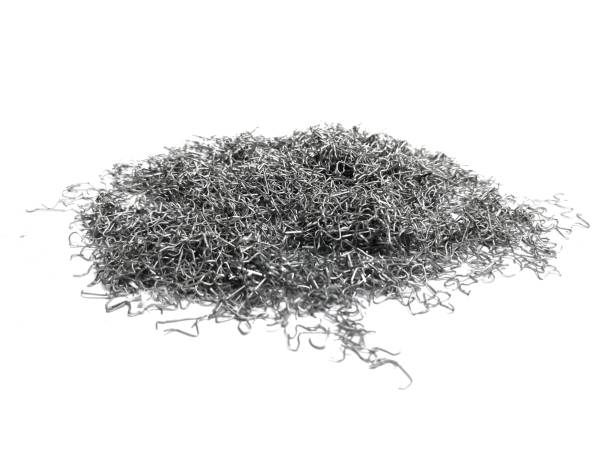
Applications of Steel Fiber For Industrial Floors
Steel fiber reinforced concrete floors are particularly suitable for industrial environments requiring high crack resistance, impact toughness, and abrasion resistance.
Industrial Buildings Floors
Steel fibre reinforced floors are widely used in industrial factories where floors experience:
Heavy machinery traffic
Continuous operational loading
Mechanical abrasion
The steel fibres improve toughness and reduce crack formation under repeated stress.
Warehouses
Warehouses require durable floors capable of supporting:
Forklift movement
Heavy storage racks
Dynamic wheel loads
Steel fibre reinforcement helps minimize floor joint failures and improves load distribution.
Areas Subject to Severe Mechanical Wear
The CN Steel Fiber application guide specifically recommends steel fiber reinforced concrete in locations exposed to severe mechanical wear and heavy impact.
Typical examples include:
Loading docks
Freight terminals
Production workshops
Material handling zones
Floors Requiring High Crack Resistance
Steel fibers are recommended for industrial floors where higher crack resistance and impact toughness are critical requirements.
These include:
Large-area jointless floors
High-traffic industrial slabs
Precision manufacturing facilities
Thermal Shock and Heat-Cycle Environments
According to the application page, steel fiber reinforced floors are suitable for areas requiring resistance to:
Thermal shock
Heat cycles
Corrosion exposure
Applications include:
Steel plants
Foundries
Industrial processing facilities
Super-Heavy Ground Applications
Hooked-end steel fiber reinforcement is recommended for super-heavy ground applications where conventional reinforcement cannot fully meet design requirements.
These floors are common in:
Ports
Airports
Heavy manufacturing plants
Container yards
FAQs
1. Why Use Steel Fibers in Industrial Flooring?
Steel fibers improve crack resistance, impact toughness, fatigue performance, and durability in industrial concrete floors. They also reduce labor requirements and accelerate construction compared to traditional mesh reinforcement.
2. What is the most common steel fibre type for industrial floors?
Hooked-end steel fibers are among the most commonly used because they provide strong anchorage and effective crack control.
3. Do steel fibres improve concrete durability?
Yes. Steel fibres improve toughness, fatigue resistance, crack control, and impact resistance, which significantly enhances long-term concrete durability.
4. Are steel fibre reinforced floors good for heavy industrial environments?
Yes. Steel fibre reinforced floors are specifically designed for demanding industrial environments involving heavy loads, abrasion, thermal cycling, and impact stress.
Conclusion
Steel Fiber For Industrial Floors has become one of the most effective reinforcement solutions for modern industrial concrete construction. Compared with conventional reinforcement systems, steel fibre reinforced floors offer superior crack resistance, toughness, durability, impact resistance, and construction efficiency.
From warehouses and logistics centers to manufacturing plants and heavy-duty industrial facilities, steel fibre reinforcement delivers long-term structural performance while reducing maintenance and operational costs.
As industrial flooring demands continue to increase, working with experienced steel fiber suppliers such as Star Smith can help ensure high-quality steel fibre solutions tailored to specific project requirements.